Monday, July 5, 2010

The Importance Of Play - Educational Toys Make A Difference


Newborns and infants enjoy a social play style that builds their trust as they prepare to explore the rest of the world.As young children grow, playtime is the biggest contributor to the healthy development of large muscles.


Playtime is one of the most vital parts of childhood development. Research has proven that all areas of development are enhanced through a child’s play activities. Healthy growth and development is stimulated through play as early as birth and on into the school age years. Children play in a variety of ways with a number of different toys. Each activity has a different affect on development.

Newborns and infants enjoy a social play style that builds their trust as they prepare to explore the rest of the world. Babies interact with their parents and caregivers as they learn to bond with people and develop a basic understanding of emotions. Social games like peek-a-boo and pat-a-cake are common play activities for older babies and toddlers.

As young children grow, playtime is the biggest contributor to the healthy development of large muscles. Crawling, walking, and running all develop gross motor skills. Preschool and school age children develop socially, emotionally, cognitively, and physically through outside play. Childhood games of tag, Red Rover, and hide and seek are great activities to encourage healthy development.

The most beneficial play is initiated by the child. During free play is when most learning takes place in young children. A child’s natural curiosity leads him to explore possibilities and test each one. A child playing with blocks will begin to stack them. Through this simple activity, the child is learning basic problem solving skills while discovering the effects of gravity and exploring sizes and shapes.

The earliest forms of play in childhood are functional play. A child will use an object for the same purpose over and over again. Through this repetition the child gains confidence in his abilities which will encourage him to do new things. Filling a bucket with sand and then dumping it out and filling it again is an example of functional play. During this type of play, children typically strengthen fine and/or gross motor skills as well as logic thinking.


Constructive play is common in preschool age children. A child playing constructively will create something through his play. This would include things like playing with blocks, doing art, or staging a puppet show. Galt’s line of giant floor puzzles will initiate hours of constructive play to develop cognitive thinking, problem solving skills, and creativity. Group constructive play encourages team work and healthy social emotional development as well.

Pretend play is a very important part of healthy development. Most children pretend and role play from their preschool years through early elementary school. This type of play has a number of benefits to the growth and development of a child. Pretend play helps children process the things they see and hear each day. It invited children to be creative and to expand their imaginations. Playing make-believe strengthens language skills and aids in proper social development.


Children gain a strong foundation for learning through play. Playtime is fun. Young children love to explore and discover new things about the world around them and about themselves. Solitary play fosters independent thinking and problem solving while group play encourages cooperation and understanding. For healthy growth and development, children should spend most of their days in free play. Allow your child to play his way and encourage him to solve problems during playtime.

Comments from us:

Beside knowing those different type of play, toys also help children to learn a lot of things,

such as, sharing, coorperate with peers or even build a great bond with each other.


Children can learn through playing computer games. Some computer games for children are suitable for them. They have a lot of interactive games that can enhance their knowledge skills, such as math, science, lauguage and speeches.
They can even learn by playing with peers, they can learn more effectively. This can enhance their social skills.


From this article i share,

i hope it's useful

we need to educated our children

because they are our future!


Lemonade Party: Invitation by Babalisme blog

This is found at: http://babalisme.blogspot.com/2010/06/lemonade-party-cupcake-topper.html


Thank you everyone for your support and kindness, and of course patience for the new Lemonade printable. Wait no more, here are the cupcake topper. I always intend my printable to be versatile, so please be creative with them, don't use this one just as cupcake toppers, use it as stickers, sew it as garlands, re-size it and make a bag of confetti, it's up to you. Please do be generous and share your idea with us.

What's a party without guests? Sure thing is to invite them in the first place. Download, resize, print, and cut along as you wish, you can even use an edge paper punch to add personality! You can even fold it in half to write personal messages inside, if any. Enjoy!

PLEASE respect my effort in making and designing the printable. Though I share it for free doesn't mean you have the right to sell, alter, and/or claim it as your own. Use it for personal use only, if your friends want a copy don't give them yours, give them the link to this post.

PLEASE do tell me if you found the printable elsewhere that violated my rights as the maker.

PLEASE share your real parties, modifications, creations, ideas, etc using the printable, you can send the link on this post or you can send the pics to my email.

Our Comments
This post is about sharing a printable cupcake topper, created by Babalisme, a creative parent that dedicated all their post to their own child. Me and my partner find this post interesting is because children will be able to be creative with it. It doesn't have to be just a cupcake topper, but use it as stickers, sew it as garlands, re-soe it and make a bag of confetti, it's up to what the children would want to do with it. Do enjoy it. =)

Friday, July 2, 2010

Why Reading Is So Important For Children

This Article is found at:
It is reading is important for children? and yes! There are very important, through the article it tell us how reading enhance and help children's development. So i opined that if you as a parent love your children so much, why don't you do it for them?


Why do we tell children to read?

We're always telling children that books and reading are good for them, but have we ever really thought about why that's true? Exactly what do older children get out of reading novels? What do younger kids get from being read to? Does reading matter?

The purpose of this article is to say that, yes, it's true, reading really is important, and that there are some solid reasons why that is so. Let's begin with the practical benefits and then move on to the less tangible rewards of a life filled with reading.

Books help children develop vital language skills

Reading is an important skill that needs to be developed in children. Not only is it necessary for survival in the world of schools and (later on) universities, but in adult life as well. The ability to learn about new subjects and find helpful information on anything from health problems and consumer protection to more academic research into science or the arts depends on the ability to read.

Futurologists used to predict the death of the printed word but, ironically, Internet has made reading more and more a part of people's daily lives. The paperless society is a myth. The computer's ability to process and analyze data means that endless variations on reports and other types of documents can be and are generated. Internet, itself an enormous new source of information and recreation, is based on the humble written word. To effectively utilize the web and judge the authenticity and value of what is found there, both reading and critical thinking skills are of prime importance.

The more children read, the better they become at reading. It's as simple as that. The more enjoyable the things they read are, the more they'll stick with them and develop the reading skills that they'll need for full access to information in their adult lives. Reading should be viewed as a pleasurable activity - as a source of entertaining tales and useful and interesting factual information.

The more young children are read to, the greater their interest in mastering reading. Reading out loud exposes children to proper grammar and phrasing. It enhances the development of their spoken language skills, their ability to express themselves verbally.

Reading, by way of books, magazines or websites, exposes kids to new vocabulary. Even when they don't understand every new word, they absorb something from the context that may deepen their understanding of it the next time the word is encountered. When parents read aloud to children, the children also hear correct pronunciation as they see the words on the page, even if they can't yet read the words on their own.

Reading can open up new worlds and enrich children's lives.

As mentioned above, reading opens doors - doors to factual information about any subject on earth, practical or theoretical. Given the wealth of available resources such as Internet, libraries, schools and bookstores, if children can read well and if they see reading as a source of information, then for the rest of their lives they will have access to all of the accumulated knowledge of mankind, access to all of the great minds and ideas of the past and present. It truly is magic !

Through books, children can also learn about people and places from other parts of the world, improving their understanding of and concern for all of humanity. This, in turn, contributes towards our sense that we truly live in a "global village" and may help us bring about a more peaceful future for everyone. This can happen through nonfiction but, perhaps even more importantly, reading novels that are set in other places and time periods can give children a deeper understanding of others through identification with individual characters and their plights.

Through stories and novels children can vicariously try out new experiences and test new ideas, with no negative consequences in their real lives. They can meet characters who they'll enjoy returning to for comforting and satisfying visits when they reread a cherished book or discover a sequel. Books also give kids the opportunity to flex their critical thinking skills in such areas as problem solving, the concepts of cause and effect, conflict resolution, and acceptance of responsibility for one's actions. Mysteries allow children to follow clues to their logical conclusions and to try to outguess the author. Even for very young children, a simple story with a repetitive refrain or a simple mystery to solve gives a confidence boost. Children can predict the patterns and successfully solve the riddles.

Children are influenced by and imitate the world around them. While a steady diet of violent cartoons may have a detrimental effect on children's development, carefully chosen stories and books can have a positive influence on children, sensitizing them to the needs of others. For example, books can encourage children to be more cooperative, to share with others, to be kind to animals, or to respect the natural environment.

Reading can enhance childrens's social skills.

Although reading is thought of as the quintessential solitary activity, in certain circumstances reading can be a socializing activity. For example, a parent or grandparent reading a story aloud, whether from a traditional printed book or from an ebook, can be a great opportunity for adult and child to share some quiet, relaxed quality time together away from the rush and stresses of the business of daily living. They share a few minutes of precious time, plus they share the ideas that are contained in the story. In addition, older children can be encouraged to read aloud to younger ones as a means of enhancing their relationship.

At school or at a library story hour, books can bring children together and can be part of a positive shared experience. For some preschoolers this may be their primary opportunity to socialize and to learn how to behave around other children or how to sit quietly for a group activity. Make the most of this experience by encouraging children to talk about what they've read or heard.

Reading can improve hand-eye coordination.

It may sound funny, but ebooks can be a way for children to improve their fine motor skills and their hand-eye coordination, as they click around a childfriendly website or click the backward and forward buttons of online story pages. They may also be picking up valuable computer skills that they'll need in school and later in life.

Reading can provide children with plenty of good, clean fun!

I've saved the most important point for last. Reading can provide children with endless hours of fun and entertainment. All of the pragmatic reasons above aren't at all necessary to justify reading's place in children's lives. Stories can free up imaginations and open up exciting new worlds of fantasy or reality. They allow children to dream and may give them a good start on the road to viewing reading as a lifelong source of pleasure; so read to your young children every day.

Inspire your older children to read. Give them access to plenty of reading material that they'll enjoy and discuss it with them. Sample everything - traditional printed books and ebooks on Internet, classic children's novels and fairy tales, as well as more modern stories.

If a child wants to hear the same story over and over again, don't worry about it. Children take comfort from the familiarity and predictability of a beloved story that they know by heart. There's no harm in that. Reread old favorites and, at the same time, introduce your children to new stories. Your child's mind and heart have room for both.

So reading really does matter after all!

There are so many ways in which reading continues to be both a vital skill for children to master, and an important source of knowledge and pleasure that can last a lifetime. Nurture it in your children. Make the most of all the resources that are available and waiting for you: printed books, online books, magazines and so forth. Encourage follow-up activities involving creative writing skills and the arts, as well, so that your children can reflect upon or expand on what they've absorbed and, at the same time, develop their own creativity. As you help your kids appreciate the magic of reading, you'll find that there's a whole wonderful world full of children's literature out there that YOU can enjoy too.

© 2004 Barbara Freedman-De Vito

Barbara Freedman-De Vito has spent many years as a children's librarian, teacher, professional storyteller, puppeteer, author and artist. She now writes, illustrates and publishes childsafe animated stories and fairy tales for children, which are sold through her publishing company, Baby Bird Productions. Please visit http://www.babybirdproductions.com/ to see her catalog of fun, colorful children's books. The site also includes a free list of suggestions for creative reading related children's activities, plus free children's games and activity pages. In addition, the site provides free advice for parents on helping children do their best in both their schoolwork and in expressing their creativity.


Below is a link that is called : Children's Storybooks Online. Illustrated children's stories for kids of all ages.

http://www.magickeys.com/books/

Have a look at the link =) There are various story for children to read at this link. I wish to share this to you all out there and share it with your own child.

Thursday, July 1, 2010

Family Guide, Keeping Youth Mentally Healthy & Drug Free


This article is from :

Gadgets and Gizmos and Games, OH MY!
Setting Rules for Kids and Technology

Children and technology have a close relationship. Video game players, cell phones, ipods, DVD players, and computers are among the hi-tech gadgets and gizmos that many kids and teens own. Tech items help young people have fun, learn new skills, and stay in touch with family and friends.

More than ever before, technology influences young people-how they communicate, how they learn, and how they spend their time. But do you have any rules in your family about the use of technology? Think they're not needed? Think again. Helping your kids to use technology smartly and safely is about setting limits regarding how they use their tech items.

Some "screen time" can be good for children. In fact, technology has many positive effects on kids and families. For example, computer and video games can give children practice following directions and solving problems; it can help kids refine fine motor and spatial skills. Plus, when children and parents play games together, they have an opportunity to have fun and talk with each other.

However, too much time with technology can negatively affect a child's health. How?

  1. Obesity-Children who watch more than 3 hours of television a day are 50 percent more likely to be obese than kids who watch fewer than 2 hours. Researchers conclude that "more than 60 percent of overweight incidents can be linked to excess TV viewing."2
This is link talks about how bad it is for childhoos obesity:
http://tomatotalk.earthfare.com/2010/03/11/childhood-obesity-know-how-bad-it-is/

  1. Aggression-Playing violent video games may be related to aggressive behavior.3, 4
  2. Lower grades-Too much time on the computer or playing video games can lead to children not keeping up with schoolwork and falling asleep in class. When youth do poorly in school, they're at risk for substance abuse and other problems.

It's important that parents create a healthy balance for children when it comes to using technology. This means setting rules about when kids can use their tech item, how long they can use it, and just how they're going to use it.


When Can I Use My.?

Good use of technology is about timing-when it's OK for kids to use their tech tools and when it's not. Think about your family's priorities and then talk about how they line up with technology use.

Together, come up with a plan for when everyone can use his or her technology items. For example, if family mealtime is a priority for your family, declare that dinner is "tech-free time." Turn off the TV, your cell phones, and all other tech devices.

It's important for adults to set an example. During your family's "tech-free time," turn off your cell phones and wireless handhelds. By taking this step, you're sending a message to your family that they matter and that you want to set aside time just for them.

Model good time management skills. After all, you don't have to answer every call or respond to every e-mail at the moment it comes in. Let your kids know that you respond to calls and e-mails later-and that it's okay to do so. You'll help your children learn how to manage their time.

For certain tech items, such as the Internet, make sure that a parent or other adult is home to monitor kids' usage. Many tech devices-from the World Wide Web to new televisions-offer parent controls. Use these tools, but remember that no program is as good as a watchful adult!

How Long Can I Use My.?

Set limits about how long your child can use a tech device. Consider factors such as your child's age, maturity, skill level, and daily schedule. It usually is best to start with short time periods and extend them after your child shows you that she can use a tech device responsibly.

For example, you might let your 10-year-old log onto instant messaging for 30 minutes after dinner if his homework is done. Your 13-year-old might get to log on earlier and for a longer time period.

What Am I Allowed To Do With My.?

Before you buy an item, ask your child about why he wants it and what he hopes to do with it. Use this conversation to make sure that you and your child have the same plans for the technology item. Children and parents often want the same tech device, but they have different plans about how to use it.

For example, many kids want a cell phone so they can call their friends and send text messages while parents think that a cell phone is good for kids to have in an emergency. Or, parents sometimes think that the latest computer will help a child with school assignments, while the child is thinking about how many songs he can put on the hard drive or how he can text message his way through a test.

Look for ways to compromise when you can. For example, maybe your child can use the cell phone to call his friends on the weekend when your calling plan offers free minutes. And maybe he can keep up to 25 songs on the hard drive at any one time.

Be Prepared

Technology items can be fun for kids and can help them to build new skills, but children need to use tech items in moderation so that they have time to explore other interests. Talk with your child and set rules together about technology use. Be prepared for your child to complain about limits at the beginning, but remember that rules such as these help protect children and will help ensure that they use tech items wisely.


Comments from Me and My Partner:

Tuesday, June 29, 2010

Is All This Technology Good For Our Kids?


This video is about Is all techonology good for our kids. its a discussion between 3 mothers. This is a story about how becoming a mom changes u to becoming a woman. This video is quite interesting and atleast mothers will know how to build close relationships with their child by using technology. Mothers will realise that their own children will be able to explore technology and check alot of stuff, for example, like what they've discussed, their own child will check the weather report by themselves. Mothers will realise that some technologies will get to improve their eye hand coordinations. Technology is not necessarily a bad thing for a child, it depends on how they use it. Parents can explore with various technology together.

Do Enjoy This Video =)

Monday, June 28, 2010

Fairy Tale Paper Doll Printable

This is found at: http://babalisme.blogspot.com/2010/05/fairy-tale-paper-doll-printable.html


It's here! It's here! The new paper doll printable you've been waiting for.

I was thinking on sharing it in here, but I can't hardly wait. The rules are still the same, print, cut, customized, and enjoy. Do share your customization by email or Flickr and I shall post it here along with the original pdf printable. Use it for personal purpose only and you shouldn't take any dimes from someone else for this printable (be nice and tell him the way to get it free : ie. here).


OK, about the printable, you may notice the small print that said : "exclusively designed for Annika". So who's Annika? Annika is a picture perfect little girl came up to me on email one day, it's a printable paper doll! This pretty much explain the fair skin, blond hair, and blue eyes, because that's what Annika and her brother Liam looks like.

If you're thinking of getting your own personalized doll that match those little rascals of yours, please don't be shy to ask, just like Annika did. Enjoy!

This is found at:
http://babalisme.blogspot.com/2009/12/doll-printableagain.html

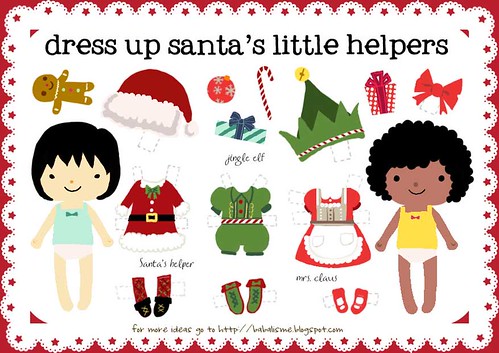
Back by popular demand. In the colors you've been asking for.

And please answer these question while you wait for the download :

  1. It's free, we know it, but it did take a hard work to create, if it's on sale, how much would you spend on this printable? 1 cent is an amount too, dearies...but please consider the hard work :)
  2. I use scribd to store it online, but you have to register to download. Is it a problem? If so, what web do you suggest to store it online? And let it be free too.
  3. Do you need the boy counterpart? ;)
  4. What is the dimension of your cookie trays (lengthxwidth)? Just curious.

Thank you. Enjoy your download. Have a Merry Christmas

My partner & me are so in love with cute stuff!!

so we decide to share this to you all!

I m sure parent and children will like it too rite?

♥ What are u waiting for? ♥

Go print it out and have fun with your children~ ♥

Sunday, June 27, 2010

The Beginning


~Welcome~
as an educator for early childhood,
we need to find out what children's need
so!!
my partner & me decided to create a blog
to share what we learn & research!
hope!!
this can help my dear parents or teacher
might be useful for you all~
althought!!
the information is less,
but if there's any doubts, you may ask us,
because we will also need any help, any feedbacks or even experiences that you have as well to gain more knowledge!!

Sincerely,
Chloe Lee Min Wei
Liew Yi Zhong